
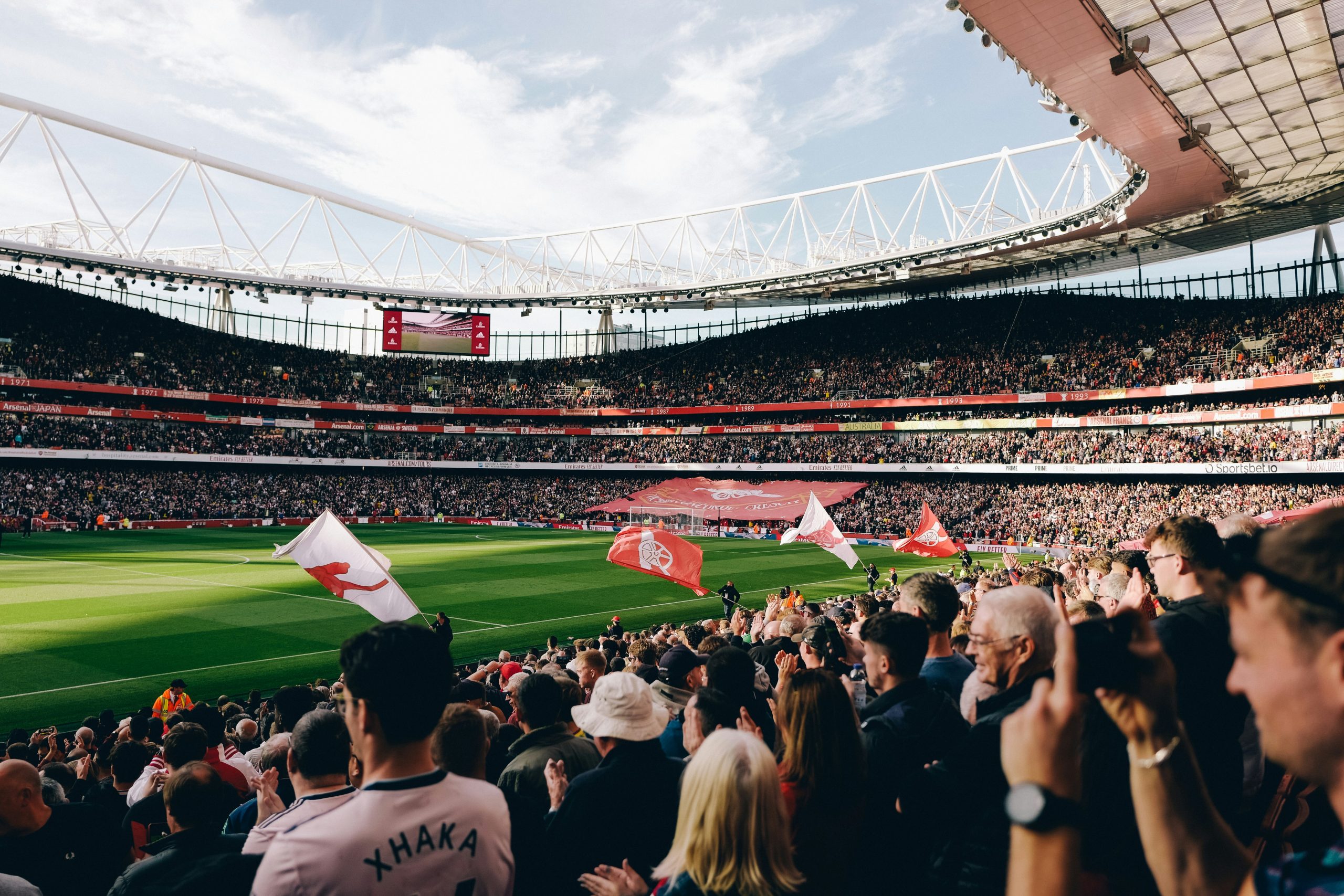
Football has a way of bringing people together. Whether you’re watching a match in a crowded pub or following the conversation online, there’s no shortage of opinions about which team will win.
But if you’re an introvert who prefers to observe, research, and form your own conclusions, you might enjoy approaching football a little differently.
Instead of getting caught up in the excitement surrounding a big club, you can focus on the details that influence performance. Team schedules, player fatigue, substitutions, and tactical decisions can all tell a more interesting story than a team’s reputation alone.
Liverpool’s busy October schedule offers a useful example of why looking beyond the obvious can matter when interpreting betting odds.
Why Anfield Doesn’t Tell the Whole Story
Anfield is famous for its atmosphere and Liverpool’s strong connection with their supporters. That reputation can influence expectations whenever Liverpool play at home.
However, home advantage is only one factor to consider.
Liverpool’s October schedule includes Manchester City on 11 October, Villarreal on 20 October, Brighton on 25 October, and Chelsea in the Carabao Cup on 28 October. Arsenal then visit on 1 November.
Between those home fixtures, Liverpool also travel to face LASK on 14 October and Brentford on 17 October.
For someone reviewing betting markets through vippari, these dates provide important context.
A team playing at home after several days of rest faces a different challenge from one returning from a demanding European fixture.
Even when the stadium stays the same, the circumstances surrounding each match can change considerably.
This is where a more analytical approach becomes useful. Rather than assuming Liverpool should be heavily favored simply because they’re playing at Anfield, examine the conditions that could influence the result.
Look for Patterns Instead of Following Popular Opinion
One advantage of taking time to research football is that you can evaluate what has actually happened rather than relying entirely on what people expect to happen.
Under Andoni Iraola, Liverpool’s early home results have challenged the assumption that Anfield automatically guarantees a comfortable victory.
Their first two Premier League home matches ended in a 2–2 draw with Nottingham Forest and a 0–0 draw with Fulham.
They also recorded a 2–1 Champions League victory over Atlético Madrid and a 3–1 Carabao Cup win against Tottenham, with Iraola making 10 changes for the cup fixture.
Away from home, Liverpool drew 2–2 with Newcastle and defeated Ipswich 2–0. After four Premier League matches, they had collected six points.
These results provide a more nuanced picture than the club’s historic reputation.
When evaluating the Manchester City fixture, for example, it makes sense to consider Liverpool’s recent home performances alongside City’s quality and the timing of the international break.
For introverts who enjoy noticing details and examining information independently, this kind of research can be more engaging than simply following the loudest prediction.
Of course, being analytical doesn’t guarantee accurate predictions. Football remains unpredictable, and even a carefully researched assessment can turn out to be wrong.
Consider Each Match on Its Own Terms
One of the easiest mistakes when looking at betting odds is treating a series of fixtures as though the same assumptions apply to every game.
Liverpool’s October schedule demonstrates why that approach can be misleading.
Manchester City, 11 October: This is Liverpool’s first league match after the international break. Rest, player availability, and City’s own preparation could influence expectations. The match-winner, total goals, and both-teams-to-score markets may deserve particular attention.
Villarreal, 20 October: Liverpool play four days after facing Brentford. The number of minutes played by key players and possible squad rotation could affect expectations around winning margins and total goals.
Brighton, 25 October: Coming five days after Villarreal, this match raises further questions about recovery and whether Liverpool can maintain their preferred intensity.
Chelsea, 28 October: Cup competitions often involve different team selections. Liverpool’s 10 changes against Tottenham in the previous round suggest that the starting lineup deserves close attention.
Arsenal, 1 November: With another major match arriving shortly after Chelsea, Liverpool’s accumulated workload could become increasingly relevant.
Instead of evaluating all these fixtures through the same lens, consider what makes each one different.
This approach is useful well beyond football. When we examine situations individually rather than relying on assumptions, we’re more likely to notice information that others overlook.
Pay Attention to the Details That Aren’t Immediately Obvious
Introverts are sometimes described as naturally observant, although that quality isn’t exclusive to any personality type.
Still, if you’re someone who enjoys examining the finer details, football provides plenty of opportunities to put that interest to use.
Consider player minutes.
A midfielder who completes several full matches in a short period may face different physical demands from a teammate who has been rested.
A forward who starts against Villarreal and Brighton may have a different expected playing time against Chelsea or Arsenal.
These details can influence how people interpret betting markets.
The 1X2 market concerns the basic match result: home win, draw, or away win.
Handicap markets introduce a hypothetical advantage or disadvantage to one side, while totals markets focus on the combined number of goals.
Player-specific markets, such as shots on target or first goalscorer, can be especially sensitive to team selection and playing time.
For this reason, checking confirmed lineups can be more informative than relying on assumptions made several days earlier.
It also helps to distinguish between information and speculation.
Knowing that a player completed 90 minutes in a previous match is a fact. Predicting that the manager will rest that player next time is an interpretation.
Keeping those two things separate can make your analysis more disciplined.
Don’t Let the Excitement of Live Betting Override Your Judgment
Football is emotional, particularly when two major clubs face each other.
A goal, controversial decision, or sudden change in momentum can completely alter the atmosphere of a match.
Live betting markets respond to those developments, sometimes changing rapidly.
For example, if Liverpool score early after a demanding week, observers might wonder whether the team will continue pressing aggressively or become more cautious to protect its lead.
That tactical decision could affect expectations about total goals and the eventual winning margin.
However, fast-moving markets also create pressure to make quick decisions.
If you prefer to process information before acting, there’s no reason to abandon that approach simply because the game is underway.
In fact, choosing not to make a bet can be just as deliberate a decision as placing one.
Avoid interpreting a sudden shift in odds as proof that a particular outcome is likely. Betting prices reflect multiple factors, including market activity and the bookmaker’s margin, and they don’t eliminate uncertainty.
It’s also worth setting financial limits in advance rather than making decisions in response to excitement, frustration, or a previous loss.
Think Ahead Instead of Focusing Only on the Next Game
When analyzing a busy football schedule, it helps to consider how one fixture might influence the next.
Liverpool’s meeting with Arsenal on 1 November is a good example.
By then, the team will have navigated matches against Manchester City, LASK, Brentford, Villarreal, Brighton, and Chelsea.
Each fixture could influence player availability, confidence, fatigue, and the manager’s selection decisions.
A platform might feature several sections, including vippari casino, but understanding Liverpool’s football odds requires attention to what happens on the pitch rather than unrelated gaming products.
The Arsenal fixture illustrates how expectations can develop over time.
A player who has featured heavily throughout October may be assessed differently from one who has enjoyed more recovery time. Injuries, suspensions, and tactical changes could also influence the likely starting lineup.
The challenge is that not all these details are known in advance.
Instead of trying to predict every development, you can identify which information matters and update your assessment as it becomes available.
This makes the process more about informed observation than certainty.
Independent Thinking Matters More Than the Crowd
There’s something appealing about watching football without feeling obligated to agree with everyone around you.
You can appreciate Liverpool’s history, enjoy the atmosphere at Anfield, and still question whether the team deserves to be a strong favorite in a particular fixture.
You can also recognize that an unexpected result doesn’t necessarily mean the original analysis was careless.
Football involves uncertainty. Even strong teams lose, and even well-supported predictions fail.
For introverts who enjoy researching, reflecting, and reaching their own conclusions, the most satisfying part may be understanding the game more deeply.
Liverpool’s October schedule offers plenty to examine, from international breaks and European travel to squad rotation and accumulated playing time.
Anfield will always be an important part of Liverpool’s identity, but it doesn’t determine every result.
The bigger picture includes rest, tactics, opponents, and the decisions made throughout a demanding month.
And sometimes, the most useful perspective comes from stepping away from the noise and looking at the details for yourself.
Related Posts
 How To Explain Your Introverted Personality To Others
 Luxury Skincare for Introverts: How to Afford It Without the Stress
 Sick of Small Talk? How to Have Meaningful Conversations
 8 Reasons To Be Thankful You’re An Introvert
 5 Ways Introverts Can Get a Roommate to Clean Up
 Are Introverts More Likely To Be Depressed?