If you’re introverted or highly sensitive, your nervous system may process stimulation more deeply and stay “on” longer, so stress doesn’t just feel mental; it becomes muscular, postural, and physiological. The good news: evidence-informed, body-focused tools (breathing, progressive muscle relaxation, gentle movement, yoga, and, when needed, physical therapy or massage) can help your system downshift and restore a sense of safety in your body.
Why introverts are prone to somatic stress
Many introverts describe a familiar pattern: a day of “normal” stimulation (noise, messages, meetings, small talk) ends with clenched shoulders, a tight jaw, a heavy chest, or a headache. This isn’t weakness or “being too sensitive.” It’s often physiology meeting environment.
Introversion often correlates with a preference for lower stimulation, and real neurobiological differences are plausible, though not always simple. Classic theories (e.g., Eysenck’s arousal hypothesis) propose differences in baseline arousal that shape stimulation-seeking, but modern reviews emphasize mixed evidence and context effects (testing conditions, tasks, measurement). The key takeaway for daily life is practical: if your system tends to feel “maxed out” sooner, you may need more intentional downshifting.
Highly sensitive people are not the same as introverts, but there’s meaningful overlap. Sensory Processing Sensitivity (SPS)—often discussed as “high sensitivity”—is a researched trait involving deeper processing and stronger responsivity to stimuli. Aron & Aron’s foundational work found SPS is partly independent from introversion, meaning you can be highly sensitive and extroverted, or introverted without being highly sensitive. Still, for many people, introversion + SPS can stack the deck toward overload.
SPS is associated with heightened awareness and responsivity at the brain level. Neuroimaging research links higher SPS to stronger activation in regions involved in awareness, attention, integration, and empathy when processing emotional or socially relevant cues—suggesting a system built to notice more and process more. That “more processing” can be a gift, but it can also be metabolically and emotionally demanding when stimulation is relentless.
Overstimulation can create chronic low-level vigilance (“always scanning”). When your environment is unpredictable or intense—constant notifications, noisy spaces, social evaluation—your stress systems (autonomic nervous system + HPA axis) may activate repeatedly. Over time, repeated activation without sufficient recovery contributes to “allostatic load,” the cumulative wear-and-tear of stress mediators on the body. This is one reason stress can shift from occasional to embodied and chronic.
How stress becomes embodied
Stress isn’t “all in your head.” It’s a whole-body state—especially when it becomes repetitive.
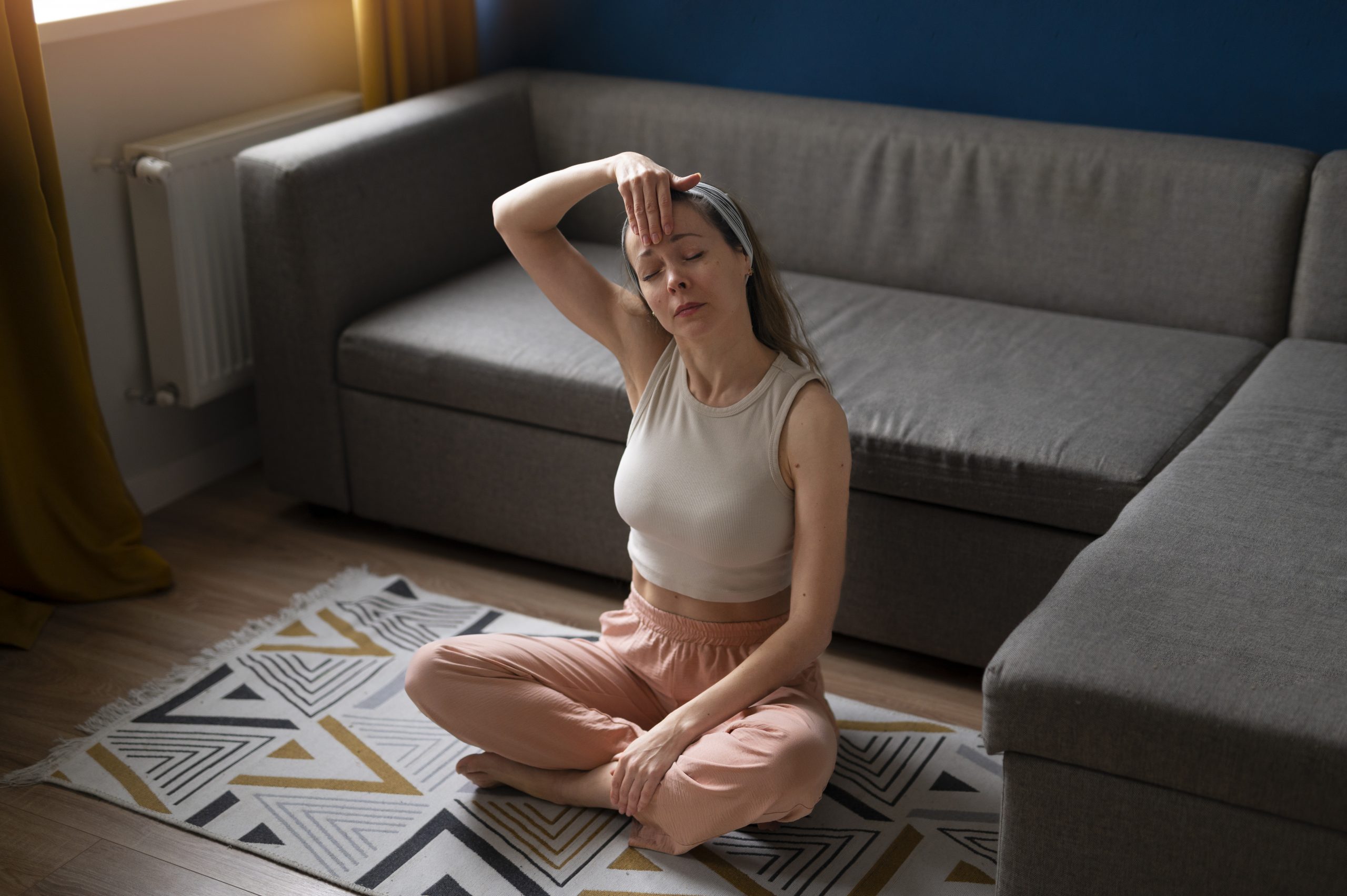
Muscle guarding and tension loops. Under stress, many people unconsciously brace, jaw, neck, shoulders, hip flexors, pelvic floor. The American Psychological Association notes chronic stress can keep muscles in a guarded state, and prolonged tension can contribute to tension headaches and other stress-related physical issues.
Lab studies also show mental stress can measurably increase muscle activity (for example, EMG activity in the trapezius), supporting what your body already knows: stress has a muscular signature.
Posture as protection. When the world feels like “too much,” bodies often fold inward: forward head posture, rounded shoulders, shallow chest breathing—an efficient protective stance that becomes uncomfortable when it turns into a default.
Autonomic dysregulation: gas pedal stuck, brake underused. The autonomic nervous system includes sympathetic (“fight-or-flight”) activation and parasympathetic (“rest-and-digest”) recovery. When your system stays keyed up—deadlines, noise, pressure to perform socially—you may feel wired-tired, tense, fluttery, or unable to fully exhale. Harvard Health describes this “gas pedal vs. brake” dynamic as central to the stress response.
Interoception: your internal signal-reading can get noisy. Interoception is the brain’s sense of the body’s internal state (heartbeat, breathing, gut sensations). Neuroscientific work highlights how interoceptive processing contributes to subjective feeling states and emotional awareness. When stress is chronic, those signals can become harder to interpret—everything feels like “something’s wrong,” even if the real message is “I need downshifting and recovery.”
Evidence-based body-focused interventions
The goal isn’t to “force relaxation.” It’s to teach your nervous system that it can return to safety, gently, repeatedly, and in ways that respect your introvert wiring.
Physical therapy
PT isn’t only for athletes or post-surgery rehab. Physiotherapy commonly includes assessment, education, and exercise to improve movement/strength, and sometimes hands-on manual therapy. It can be especially helpful when stress shows up as neck/back pain, tension-related headaches, or movement patterns shaped by bracing.
Massage therapy
Massage can downshift arousal through touch, rhythm, and localized reduction of muscle guarding—many people experience short-term relief in tension and perceived stress. However, evidence varies by condition and study quality; the U.S. National Center for Complementary and Integrative Health (NCCIH) notes that, in some contexts (e.g., cancer supportive care), evidence for anxiety/pain relief isn’t strong, though guidelines sometimes include massage among potentially helpful stress-reduction approaches.
Breathwork (slow, controlled breathing)
Slow breathing practices can influence autonomic balance and heart rate variability (HRV). A systematic review in Frontiers in Human Neuroscience reports slow breathing is associated with autonomic and central nervous system changes, including increased HRV/respiratory sinus arrhythmia and corresponding shifts in brain activity—often experienced as calmer alertness.
Progressive muscle relaxation (PMR)
PMR teaches your brain the contrast between tension and release by systematically tensing and relaxing muscle groups. Reviews of PMR research report reductions in stress, anxiety, and depressive symptoms across varied adult samples (though protocols and study quality vary). For introverts, PMR is appealing because it’s quiet, private, and highly structured.
Somatic Experiencing and other body-focused trauma therapies
If your stress response feels disproportionate, sticky, or trauma-linked, body-oriented psychotherapy may help. A randomized controlled study of Somatic Experiencing (SE) for PTSD reported significant improvements in posttraumatic symptoms and depression, while emphasizing the need for further research on who benefits most. (For everyday stress without trauma, SE-informed principles—tracking sensations, pendulation between comfort/discomfort—may still be supportive.)
Yoga and gentle movement
Yoga combines movement, breathing, and attention regulation. A meta-analysis of randomized trials found evidence yoga may reduce anxiety intensity in the short term (with nuances depending on diagnosis and study selection). NCCIH similarly notes findings suggesting short-term benefits for anxiety, while reinforcing that it’s not a replacement for first-line care when anxiety disorders are present.
Even simpler: consistent gentle movemen,t (walking, mobility work) helps discharge stress physiology and restore body confidence.
Comparison of body-based options
Costs vary widely by country, licensing, insurance coverage, and setting. Where pricing is unknown or too variable to responsibly summarize, it’s marked as unspecified.
Practical, introvert-friendly routines and tips
The most effective routine is the one that doesn’t require you to become someone else. Aim for small, repeatable “micro-downshifts” that prevent stress from accumulating into pain.
A quiet daily rule that works: Downshift before you’re desperate. This is especially important for SPS, where susceptibility to overstimulation is part of the pattern.
A two-minute sensory downshift (anytime) 1. Lower input: dim your screen, reduce sound, or step into a quieter space.
2. Exhale longer than you inhale for 6 cycles (e.g., inhale 4, exhale 6). Slow breathing is linked to measurable autonomic shifts.
3. Unclench the “three gates”: jaw, shoulders, hands.
4. Ask one interoceptive question: “Where do I feel tightest right now?” (No fixing—just noticing.) Interoception is literally the brain mapping of body state.
A ten-minute shoulder/neck reset (evening) 1. 60 seconds: warm compress or hot shower to reduce guarding.
2. 2 minutes: gentle neck range of motion (pain-free).
3. 3 minutes: PMR just for jaw/shoulders (tense 5 seconds, release 10 seconds, repeat). PMR is supported across studies for stress/anxiety reduction.
4. 4 minutes: slow breathing lying down with one hand on belly, one on chest.
| Day | Micro-practice | Main practice | Time |
| Monday | 2-min exhale-long breathing | 10-min gentle walk | 12 min |
| Tuesday | Jaw/shoulder unclench | 15-min PMR (full body) | 15–18 min |
| Wednesday | Quiet stretch break | 20–30 min gentle yoga (restorative) | 20–30 min |
| Thursday | 2-min sensory downshift | Mobility + posture reset | 15 min |
| Friday | Exhale-long breathing | Light strength (bands/bodyweight) | 15–20 min |
| Saturday | Nature “low stimulation” time | Longer walk + body scan | 20–40 min |
| Sunday | PMR (short) | Plan week boundaries + recovery blocks | 10–20 min |
Environment hacks introverts actually use. Choose lower-sensory conditions on purpose: quiet music (or none), warm lighting, comfortable clothing, and a predictable routine. Your nervous system learns safety through repetition and reduced uncertainty, key when stress becomes chronic.
How to choose professional help and what to expect from physical therapy and massage
If stress is repeatedly showing up as pain, headaches, jaw clenching, neck tightness, or persistent fatigue, professional support can reduce the load you’ve been carrying alone, without requiring you to “talk it all out” if that isn’t your style.
What to expect from physical therapy
At a first physiotherapy appointment, clinicians typically ask about symptoms, medical history, and lifestyle, assess the affected area (strength, balance, movement), discuss options, and may prescribe exercises, manual therapy, and self-management guidance.
For many introverts, PT is reassuring because it’s structured: goals, a plan, and measurable progress.
What to expect from a massage
You should expect clear consent, options (pressure, silence vs. conversation), appropriate draping, and permission to stop or adjust at any time. NCCIH emphasizes appropriate precautions and notes the evidence varies, so a responsible therapist won’t promise miracles.
Introvert-friendly questions to ask before booking
A short email is often easier than a call. Consider asking: – “Can I request a quiet session (minimal conversation)?”
- “Can you describe what the first appointment looks like and how long it lasts?” (PT visits often include assessment + plan.
- “How do you handle consent and communication during hands-on work?”
- “Is the environment low-sensory (lighting, music volume, private rooms)?”
- “Do you have experience with stress-related tension headaches or neck/shoulder guarding?” (Stress-related muscle tension and headaches are well recognized.)
Red flags
A clinic may not be a good fit if: – They dismiss your request for quiet, predictability, or sensory comfort.
- They push painful techniques without consent or shame you for flinching.
- They guarantee cures or frame your symptoms as “just in your head,” ignoring the established mind–body stress pathway.
- They discourage questions, refuse to explain a plan, or pressure you into long prepaid packages immediately.
Finding a clinic that respects introvert needs
Look for “patient-centered,” “trauma-informed,” or “consent-based” language, and clinics that explain what to expect. If you want a non-promotional example of how a physical therapy + massage clinic may describe services and intake, you can browse https://www.miraclerehabclinic.com and notice whether the structure (services, locations, forms) helps reduce uncertainty before a first visit.
Conclusion and further reading
Carrying stress in your body doesn’t mean you’re broken; it often means your system is doing its best to protect you in a loud world. With compassionate pacing and evidence-informed tools, you can teach your nervous system a new default: less guarding, more breath, more room inside your own skin.